
Quick answer: A make-good clause is the lease term requiring a tenant to restore a unit before handover. A dilapidation report is the record of the unit’s condition that defines what “restored” means. The clause creates the obligation. The report sets the standard.
Two documents decide what your lease-end handover will cost, and most tenants only read them properly once the expiry date is close. The first is the make-good clause in your tenancy agreement. The second is the dilapidation report or schedule of condition attached to it. The dilapidation meaning in a commercial property context is a record of the state of a unit at a given point in time, usually the day you took possession. The make-good provision is the promise you signed to return the unit to that state. Together they define the entire scope of your reinstatement, before a single contractor has looked at the space.
Read them early and you control the project. Read them late and the project controls you.
What is dilapidation in a commercial lease
In construction and property, dilapidation refers to the condition of a building and, more specifically, to the documented record of that condition. A dilapidation report, sometimes called a dilapidation survey or a schedule of condition, is a written and photographic record of a unit at a fixed moment.
There are usually two of them in a commercial tenancy. The ingoing record captures the unit as handed to you at the start of the lease. The outgoing record captures it at the end, when the landlord or their managing agent inspects what you are returning. The gap between those two records is your reinstatement scope. Anything present in the outgoing record that was not in the ingoing record is something you are likely to be asked to remove or make good.
This is why the ingoing record matters far more than tenants realise on day one. If no proper record was taken when you moved in, the standard you are held to at the end becomes a matter of argument rather than evidence, and arguments at handover are settled against a deadline you cannot move.
What is a make-good clause
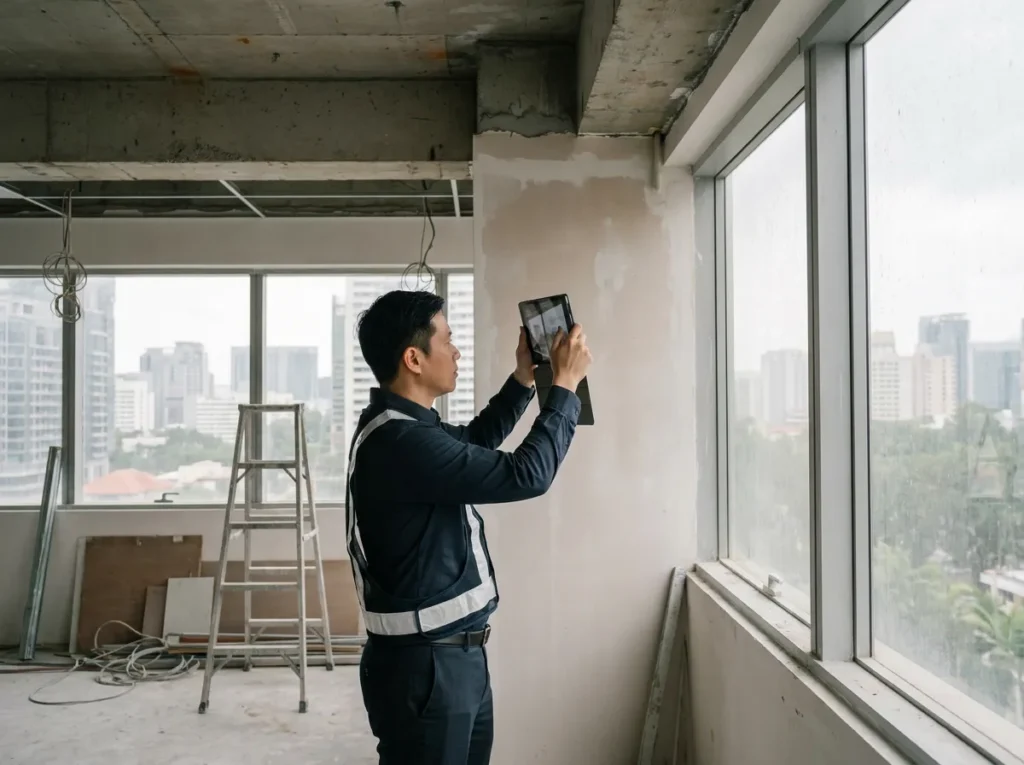
A make-good clause, also written as a make-good provision or a reinstatement clause, is the term in your tenancy agreement that obliges you to restore the premises before the lease ends. In Singapore this is contractual rather than statutory. There is no national rule setting a standard handover condition for commercial units, so the obligation is whatever the two parties agreed when the lease was signed.
That has a practical consequence worth stating plainly. Two tenants on the same floor of the same building can owe completely different make-good obligations, because their leases were negotiated separately, often years apart, sometimes with different landlords. You cannot infer your obligation from what the tenant next door is doing. You have to read your own clause.
A typical clause will specify the condition the unit must be returned in, the date by which the works must be complete, whether the landlord’s approval of the works or the contractor is required, and what happens if the works are not finished on time. That last part is usually where the cost sits.
The three end states, and why this is the only detail that really matters
Almost every reinstatement clause resolves to one of three end states. Identifying which one applies to you is the single highest-value thing you can do before pricing any works, because the difference between them is far larger than the difference between two contractors’ quotes.
| End state | What the clause asks for | What you actually remove | Relative cost |
|---|---|---|---|
| Remove tenant additions | Take out what you installed, repair and repaint | Your partitions, joinery, signage, added power and data. Ceiling and floor finishes often stay. | Lowest |
| Base build / developer’s standard | Return to the landlord’s original handover specification | Everything above, plus finishes back to the original spec. Base ceiling and lighting usually remain. | Middle |
| Bare shell | Strip the unit to an empty structural box | All of the above, plus false ceiling, all floor finishes, and M&E capped back to the riser | Highest |
If your clause names a condition you do not recognise, that is a question for your landlord or managing agent in writing, before works are scoped. A tenant who assumes bare shell when the clause only requires removal of additions can pay for a substantial amount of work they never owed. The reverse error is worse, because it is discovered at the joint inspection.
What a dilapidation report should contain
A dilapidation report that will actually protect you at handover is more than a set of photographs. It should record:
- Date and scope. The unit reference, floor area, and the date of inspection.
- Photographic record. Every wall, floor, ceiling, column, service riser and any existing damage, timestamped.
- Written condition notes for each element, describing finishes and their state rather than just showing them.
- Existing defects. Anything already damaged before you took possession, recorded explicitly so it is not attributed to you later.
- Services record. Existing lighting, power points, sprinkler heads, ACMV terminals and their positions.
- Sign-off by both parties, or at minimum acknowledged receipt by the landlord or managing agent.
Existing defects are the line item most often left out and most often regretted. A crack, a stained ceiling tile or a damaged skirting that predates your tenancy costs nothing to record on day one and can cost real money to dispute on the last day.
How the clause turns into a cost
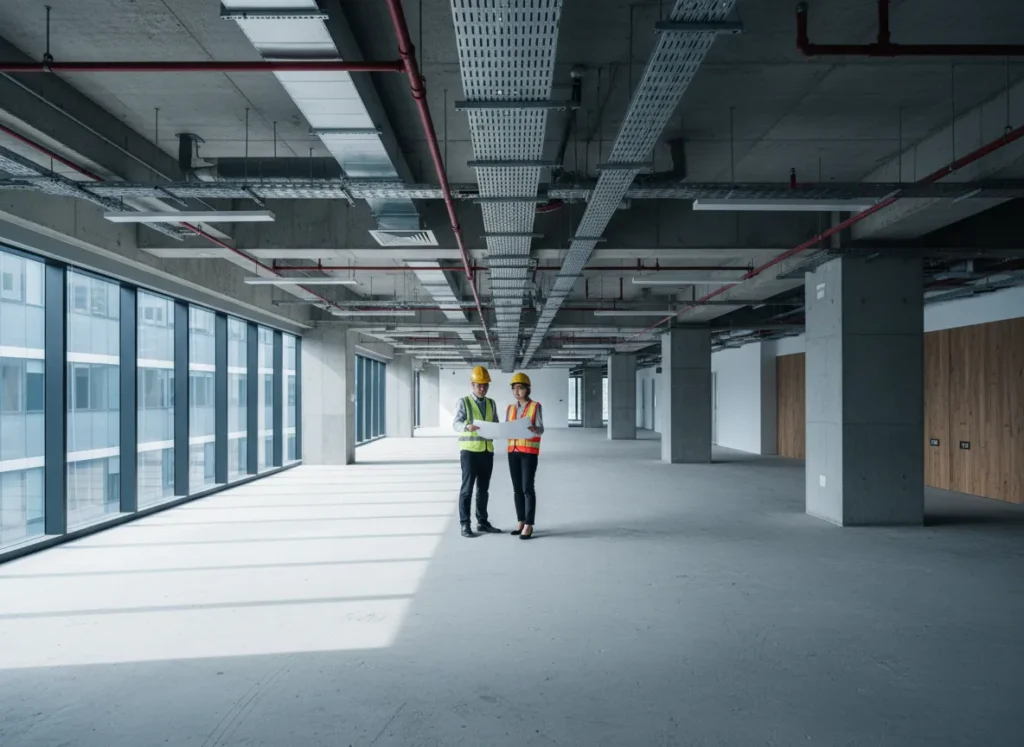
The mechanism is straightforward. If the works are not complete and accepted by the expiry date, the landlord has remedies written into the same lease. Typically they can complete the works themselves and recover the cost from you, deduct that cost from the security deposit they are already holding, or charge holding-over rent for the period the unit remains unavailable, often at a premium to your normal rate.
The security deposit is usually the largest exposure, and it is worth comparing it against your likely reinstatement cost early. Office reinstatement in Singapore generally runs at around S$10 to S$20 per square foot, and for most units the deposit at risk is a larger number than the difference between the cheapest and the most reliable quote. That comparison is the whole argument for planning the handover properly rather than shopping it at the last minute.
What to do when you receive the clause
A workable sequence, starting six to nine months before expiry:
- Locate both documents. The reinstatement clause in the tenancy agreement, and the ingoing dilapidation report or schedule of condition.
- Identify the end state. Match your clause to one of the three standards above and write it down in plain language.
- Query anything ambiguous in writing. Email the landlord or managing agent. A written answer becomes part of the record.
- Get the unit assessed against the clause, not against a generic scope. The assessment should tell you what you owe and, just as usefully, what you do not.
- Confirm approvals. Many leases require landlord approval of the works, the contractor, or both. Building management and MCST submissions also take time.
- Book the works with a real buffer before handover day, and use our office handover checklist to run the full countdown.
If you are still working out what the clause is asking for in the first place, our explainer on what office reinstatement means covers the works themselves in more detail.
Where a contractor fits in
A reinstatement contractor should be able to read your clause and schedule with you and scope the works to exactly what the landlord will sign off, rather than quoting a standard strip-out and letting you carry the difference. That review costs nothing at the assessment stage and routinely changes the scope in the tenant’s favour.
Trends Interior has worked on commercial units in Singapore since 2004 and is BCA-registered. We are commercial only, and we handle reinstatement across offices, retail and industrial space with our own in-house crews for electrical, drywall and partitioning, ACMV and carpentry. On a strip-out that sequencing matters, because each trade hands over to the next inside a short window and there is no slack at the end of it.
The clause is the project brief, so read it first
The make-good clause and the dilapidation report are not paperwork to be handed to a contractor at the end. They are the scope, the standard and the deadline for the whole handover, and every decision that follows is downstream of what they say. A tenant who identifies the end state early can plan a reinstatement calmly. A tenant who discovers it at the joint inspection is negotiating from the worst possible position.
If your lease is coming up for expiry and the clause is not clear, have it read against the actual unit before anyone prices the works. Our team can assess your space alongside your reinstatement and make-good obligations and tell you what the scope genuinely is. Get in touch with your handover date and we will work backwards from it with you.
Not sure what your reinstatement clause is asking for? Book a free site assessment and we will read it against your unit before any scope is priced.
Frequently Asked Questions About Make-Good Clauses and Dilapidation
What does dilapidation mean in property?
Dilapidation refers to the condition of a property and to the formal record of that condition. A dilapidation report documents a unit in writing and photographs at a fixed date, usually at the start and again at the end of a lease, and the difference between the two defines the tenant’s reinstatement scope.
What is a make-good clause in a commercial lease?
A make-good clause is the term obliging a tenant to restore a leased unit to a specified condition before handover. In Singapore it is contractual rather than statutory, so the required standard is whatever the lease sets out and varies between landlords and between tenancies in the same building.
Is a dilapidation report compulsory in Singapore?
There is no statutory requirement for one, but most commercial leases refer to a schedule of condition or dilapidation record, and landlords commonly rely on it at handover. Tenants without an ingoing record have far less evidence when the outgoing inspection is disputed.
What is the difference between a make-good clause and a reinstatement clause?
In practice they refer to the same obligation. Make good and reinstatement are used interchangeably in Singapore commercial leases, and some agreements use make-good provision for the same term. What changes your scope is the end state named in the clause, not the label.
Who pays for reinstatement if the tenant does not do it?
The landlord can generally complete the works and recover the cost from the tenant under the lease, most often by deducting it from the security deposit. Holding-over rent may also be charged for the period the unit stays unavailable past the expiry date.